
Craft: A new approach to AI RPGs
We’re building Craft, a new platform for building and playing AI RPGs.
Craft is the next big step in the vision that started with Friends & Fables. It gives creators far more control over their worlds, systems, files, maps, models, and rules, while still making it easy for players to jump into AI-powered adventures.
This is a long post because we wanted to be transparent about how we got here: what we learned from Friends & Fables, what worked, what didn’t, and why those lessons led us to Craft.
TL;DR: Friends & Fables taught us a lot. It proved that people want AI-powered RPGs, but it also showed us that F&F could not support every kind of world, system, rule, and campaign without losing what made it simple, affordable, and easy to play. F&F is not being sunset; it will continue as an easy, unlimited AI D&D 5e-style experience. Craft is where we’re taking the broader future of AI RPGs: deeper worldbuilding, custom systems, creator control, and more ambitious AI-powered adventures.
Before we get deeper into Craft, we want to talk about Friends & Fables: why we built it the way we did, and how those decisions led us here.
Friends & Fables
Friends & Fables started with a simple goal: make the best AI roleplaying game possible.
From the beginning, we imagined something that felt like playing through a book being written in real time. It would be immersive, infinite, and delightful. A game that could become whatever you wanted it to be. A story that could respond to you, surprise you, and keep going for as long as you wanted to play.
That was always the vision. But the technology available when we started was very different from what exists today.
When we first began building Friends & Fables, most people still had not heard of ChatGPT. It was the early days of consumer AI, and the language models we could use were much more limited than today’s models. For example, one of the first models we used in Friends & Fables was GPT-3.5 Turbo. On Artificial Analysis’s intelligence benchmark, that model scored a 9. Today, models are dramatically more capable. GPT-5.5, for example, scores a 60.2 on that same benchmark.
That difference matters a lot.
In the early days, the models were not smart enough to reliably run the kind of game we wanted on their own. So we had to compensate. We filled in gaps in reasoning, memory, structure, rules, and decision-making with code and logic. This is also one of the reasons we focused on D&D 5e. By choosing one game system, we could narrow the scope of all the scaffolding we needed to build around the AI.
That approach worked for its time. It let us create an experience that, for many players, felt closer to playing D&D with an AI than anything else available. But it also created real tradeoffs.
The Decisions That Shaped Friends & Fables
When we built Friends & Fables, we made a few core product decisions that shaped almost everything else.
1. It had to support affordable, unlimited play
A few years ago, AI changed the economics of software and games.
In traditional software or live-service games, costs are usually dominated by people, development, infrastructure, and servers. Once the product is built, each additional play session usually does not create a large new cost.
AI flipped that model on its head.
When you build an AI game, every time a player plays, the product incurs additional model costs. Every message, every scene, every combat turn, every memory lookup, and every generation has a cost attached to it.
Today, most AI products deal with this by using usage-based pricing, subscriptions with usage limits, or some combination of the two. Even the biggest AI companies have usage limits on their subscriptions.
But when we started Friends & Fables, we believed that gamers were more used to the traditional live-service model: pay a flat subscription and play as much as you want. We also preferred that ourselves. At the end of the day, we were building a game, and we wanted people to play it. The idea of charging a little bit every time someone played felt like it would create friction in the exact place where we wanted freedom.
So we decided to do everything we could to make Friends & Fables unlimited.
That decision affected almost every technical choice we made. It meant we needed to use more affordable models and make them work better through code, structure, prompting, and other techniques. In many ways, this was the right call. It made Friends & Fables accessible, affordable, and easy to play for long sessions.
But it also created limits.
Because unlimited play required us to control costs, we had to control context. That is why text fields on your sheets have character limits. That is why we have to be careful about how much information is sent to the AI on each turn. If every player could send unlimited context into every generation, the economics of unlimited play would break very quickly.
The same scaffolding that made F&F work also became one of its biggest constraints. The code and logic we built to guide the AI created invisible walls. Most of the time, those walls helped the experience stay coherent. But sometimes players ran into them and felt frustrated. It also made the platform harder to change over time. As we added more systems, those systems became more intertwined, and updates naturally became slower and more complicated.
2. It had to be simple for players
Another early assumption we made was that most players did not want to think about LLMs, context windows, prompts, or model settings. They just wanted to play the game.
That is why, for the first two years, we did not even let players switch models. We tried to hide the AI as much as possible. We managed the prompts, the system design, the context, the memory, the token limits, the character sheet fields, and the way Franz understood the world.
In other words, we made as many decisions as we could for the player so they would not have to think about them.
That made Friends & Fables easier to use, especially for people who just wanted to jump into an adventure. But again, there was a tradeoff: flexibility.
Over time, more and more players started asking for things like custom character sheets, different game systems, campaign-specific rules, new fields, modified prompts, or deeper control over how Franz understood their world. Often, those requests made complete sense for that player’s campaign. But they were not always generic enough to work for everyone.
That forced us into one-size-fits-all solutions.
Friends & Fables became a successful but limited product. It worked well enough to give many players an experience that felt close to AI-powered D&D. But it also meant that some players kept running into the boundaries of the system. The more ambitious their campaigns became, the more those invisible walls started to show.
Why We Started Building Craft
In January 2026, we knew one of the biggest things we needed to improve in Friends & Fables was combat.
Combat is one of the hardest problems to solve in a system like F&F. By that point, we were already on our fifth rewrite. We had tried a lot of approaches, and each one improved things in some ways while introducing new problems in others.
Eventually, we decided to take a step back.
Instead of patching the existing system again, we asked a different question:
If we were not constrained by the design decisions we had already made, what would we build today?
So we started fresh.
We prototyped new approaches using smarter models, a very different model harness, and a different way of thinking about how the AI should interact with the game state. The early results were extremely promising. For the first time, we felt like we had something that could solve problems we had been fighting for years.
But there was a catch.
What we were building was very different from the system already inside Friends & Fables. F&F was live, with thousands of people using it. Ripping out the core systems and replacing them with something completely different would have been a huge risk.
It is hard to repair a ship while it is sailing. It is even harder when the ship is full of people using it every day.
We came to the realization that the best way to deliver on our vision was to start building these solutions as a separate product, allowing us to make a completely different set of decisions and tradeoffs without affecting the players currently using our platform.
That product is now Craft.
What Is Craft?
Craft is a platform for building, customizing, and playing the next generation of AI RPGs.
If Friends & Fables is homebrewable AI D&D, Craft is closer to Roblox for AI RPGs.
In Friends & Fables, you can build a world on top of our 5e-inspired system. In Craft, you can build a world but you can also build the system. That means you can choose to build on top of a 5e variant like Friends & Fables, or you can build an entirely new system. You can create your own rules, structures, worlds, files, maps, scripts, and experiences.
The biggest difference is control.
With Friends & Fables, we made most of the system decisions for you and that meant you were bound to work within the confines of those decisions. With Craft, we are giving builders far more control over the underlying structure, greatly increasing the ceiling of what is possible.
One concern we have heard is that Craft might be too technical for casual players. That is not the goal.
Like Roblox, the deepest creation tools will take time to master. But playing existing content, tweaking templates, or building from prebuilt systems should be approachable for many players. We are also building Orbit, an AI assistant that can help with worldbuilding, editing, setup, and system changes. Our goal is for Craft to be powerful enough for serious builders while still being accessible to players who just want to jump into an adventure.
Here are some of the major pieces that make Craft different.
Flexible File System
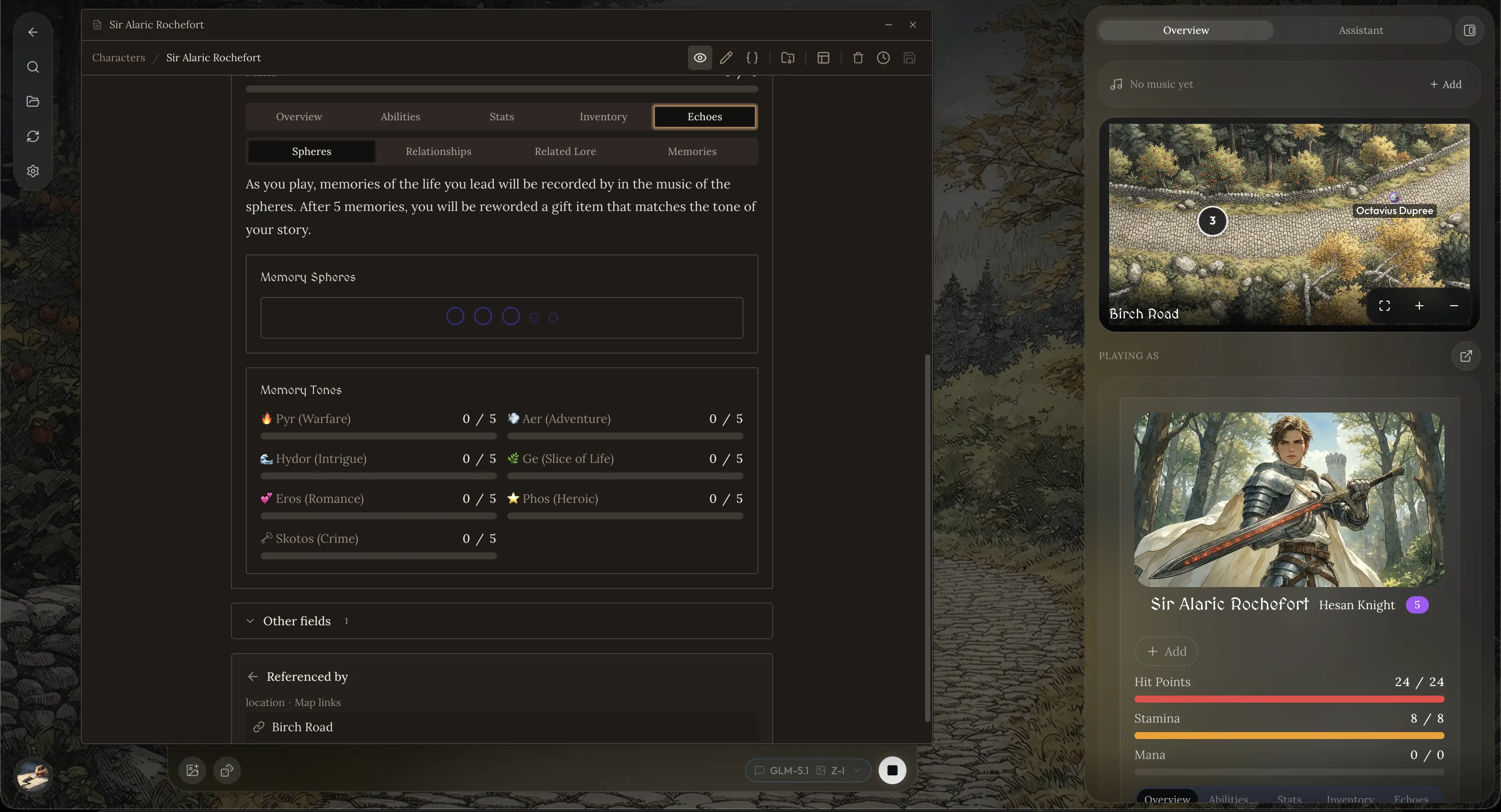
Craft’s flexible file system is the single biggest innovation in Craft. In this system, you can define files of any type or shape. For example, you can create a “Vehicle” file type and assign the fields that make sense for the vehicles in your game. Want to add a “Fuel” value? You can do that. Additionally, you can also fully customize the layout and presentation of these files. You can organize and style your character sheets exactly the way you want.
Worldbuilding Assistant
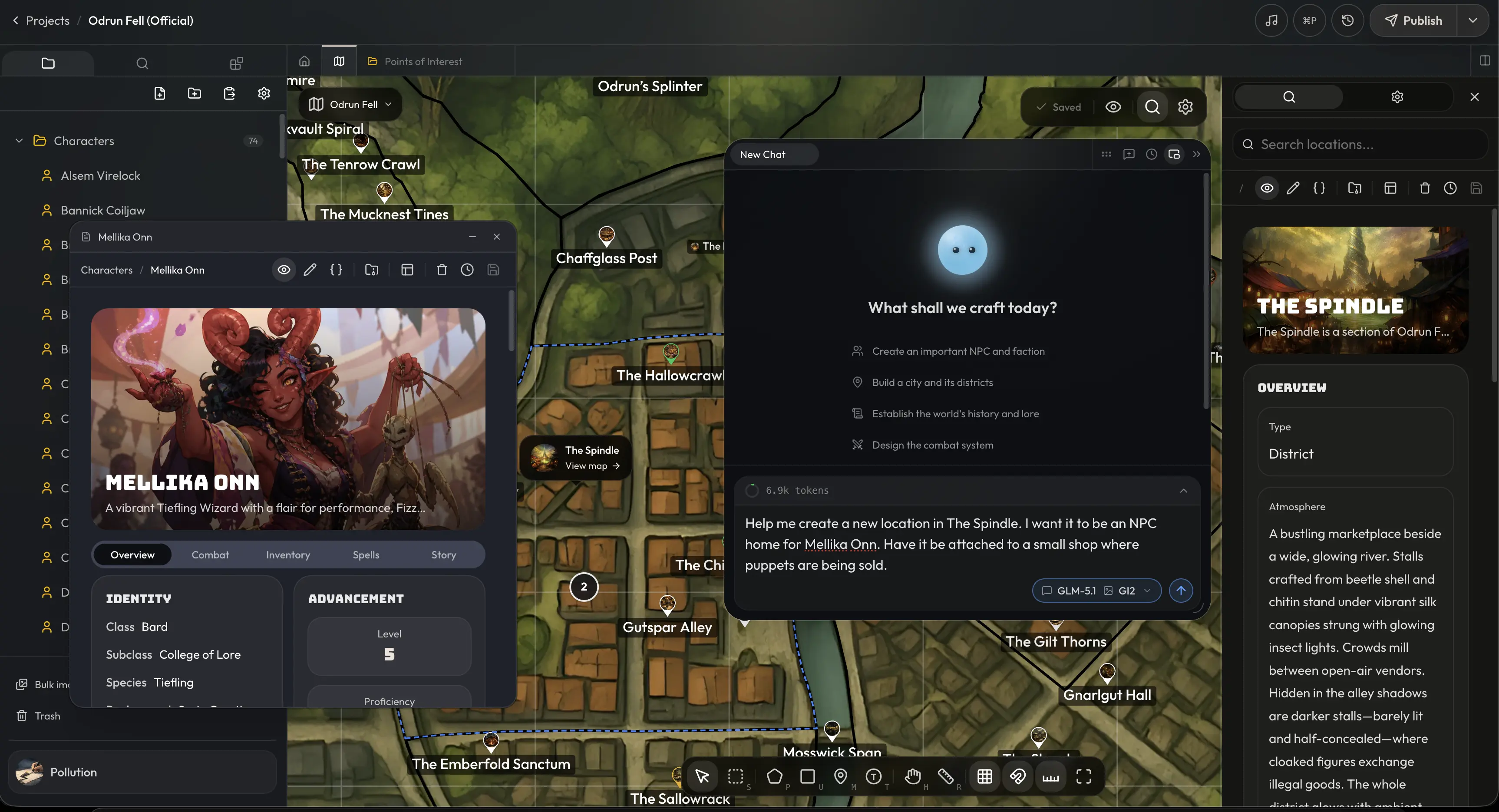
You no longer have to laboriously fill out forms by hand to have your ideas come to life. We built Orbit, a helpful worldbuilding assistant that can take your ideas and help you build out the world by creating files, styling character sheets, and more. Any change to your world is now just a message away.
Hierarchical Maps
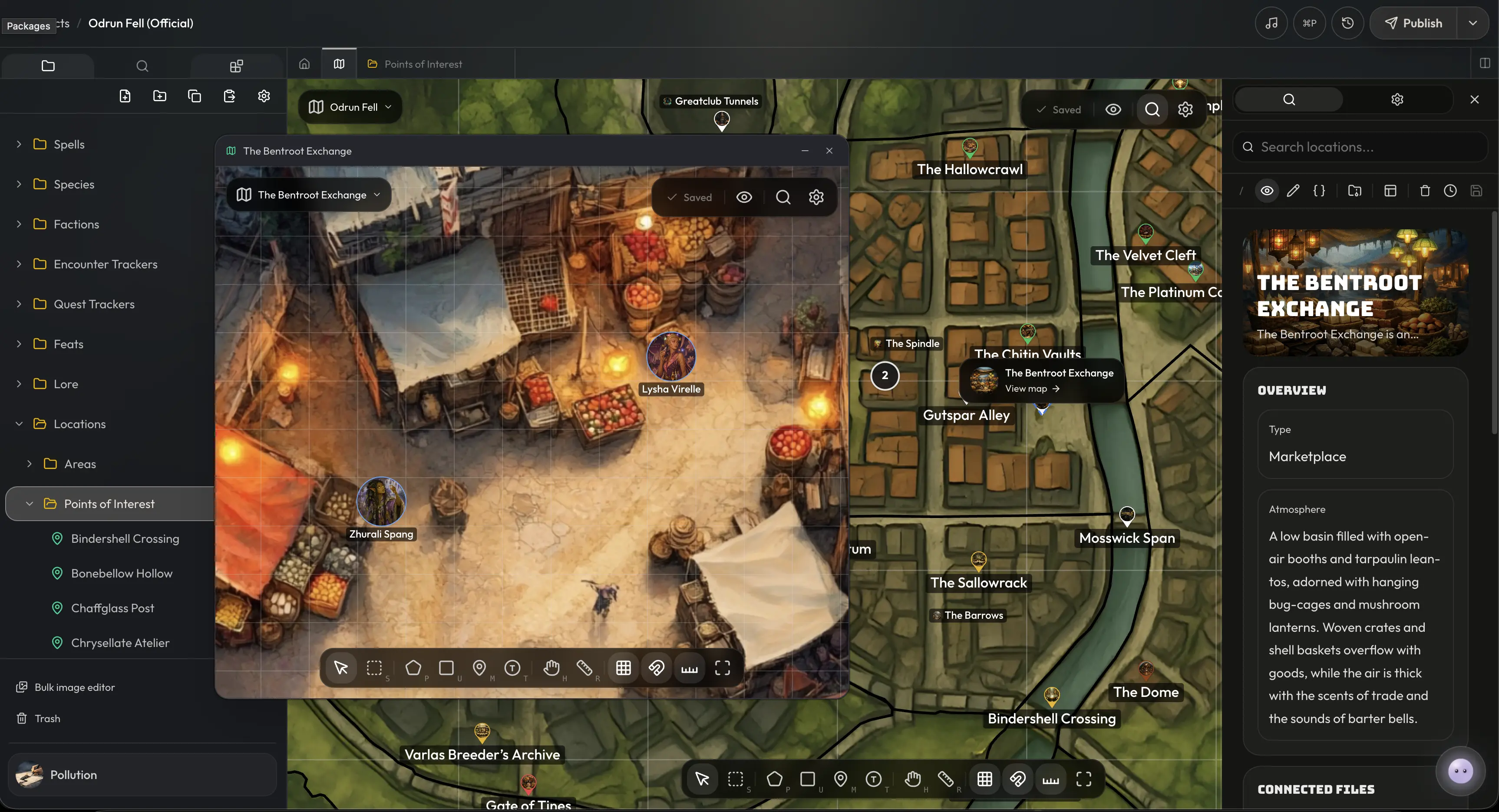
Maps in Craft are seriously awesome. They are hierarchical, so you can nest maps with maps. You can configure the settings for each map, including scale, grid type, and more.
For you map makers, we made editing the map much smoother and added QoL features such as auto line snapping and retrace to erase.
Multimedia
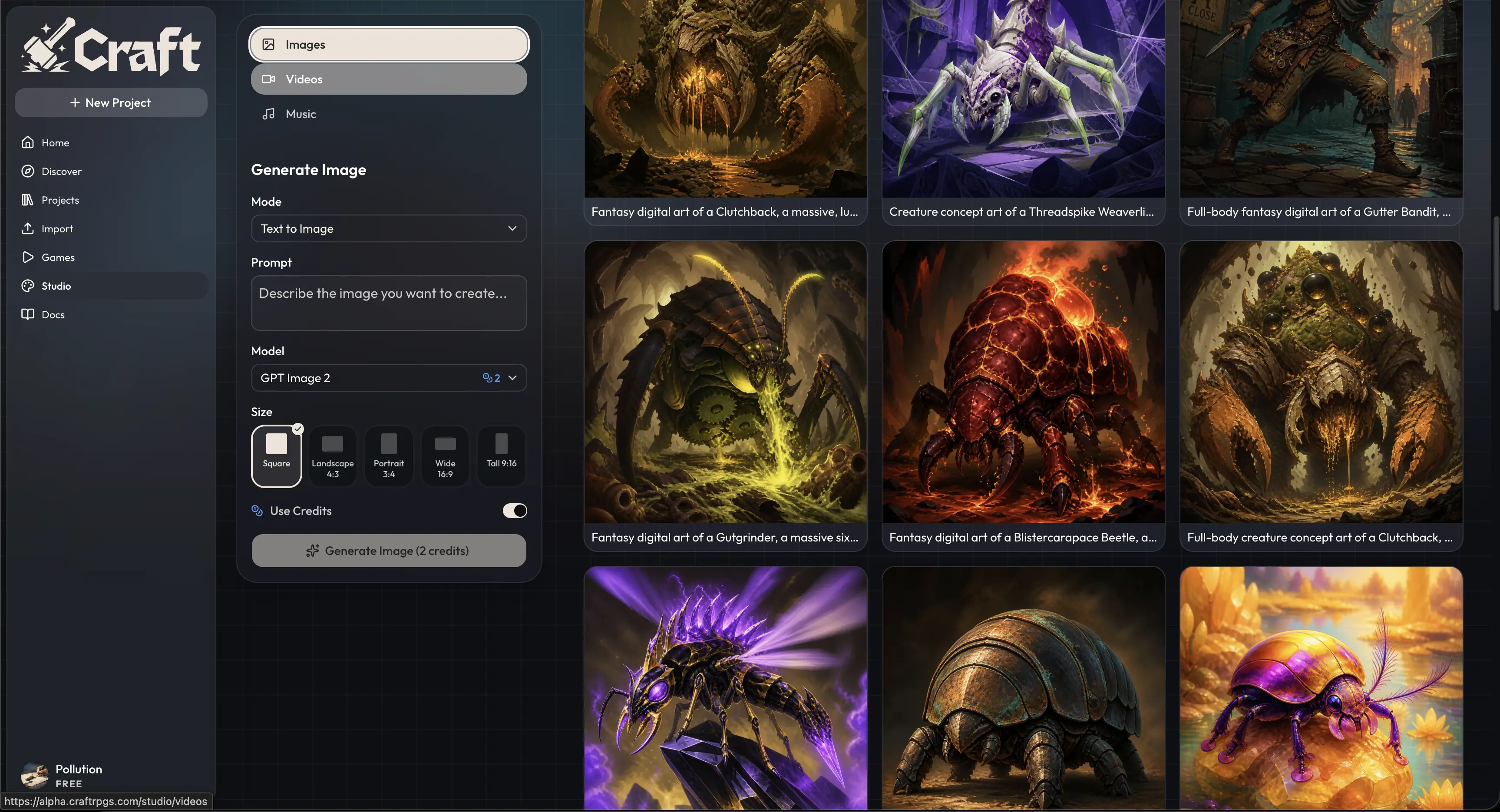
One of our goals with Craft was to make it as immersive as possible. At launch, you’ll be able to generate images, video, TTS, and music with some of the best models available and more will be coming in the future.
Model Choice
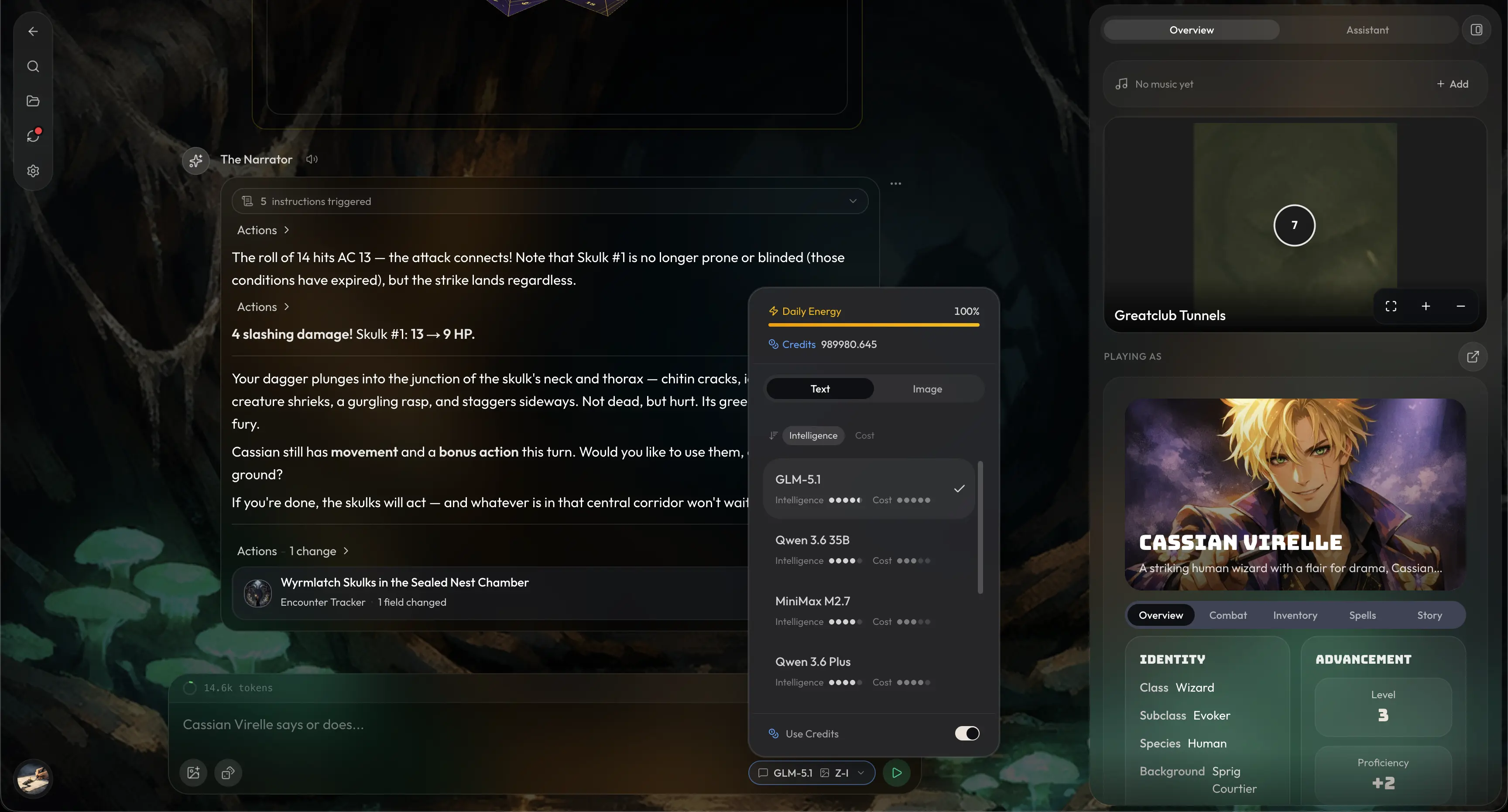
In Craft, you'll be able to choose from dozens of LLMs to pick the perfect one for your play style and requirements.
Craft Data Format: Import and Export
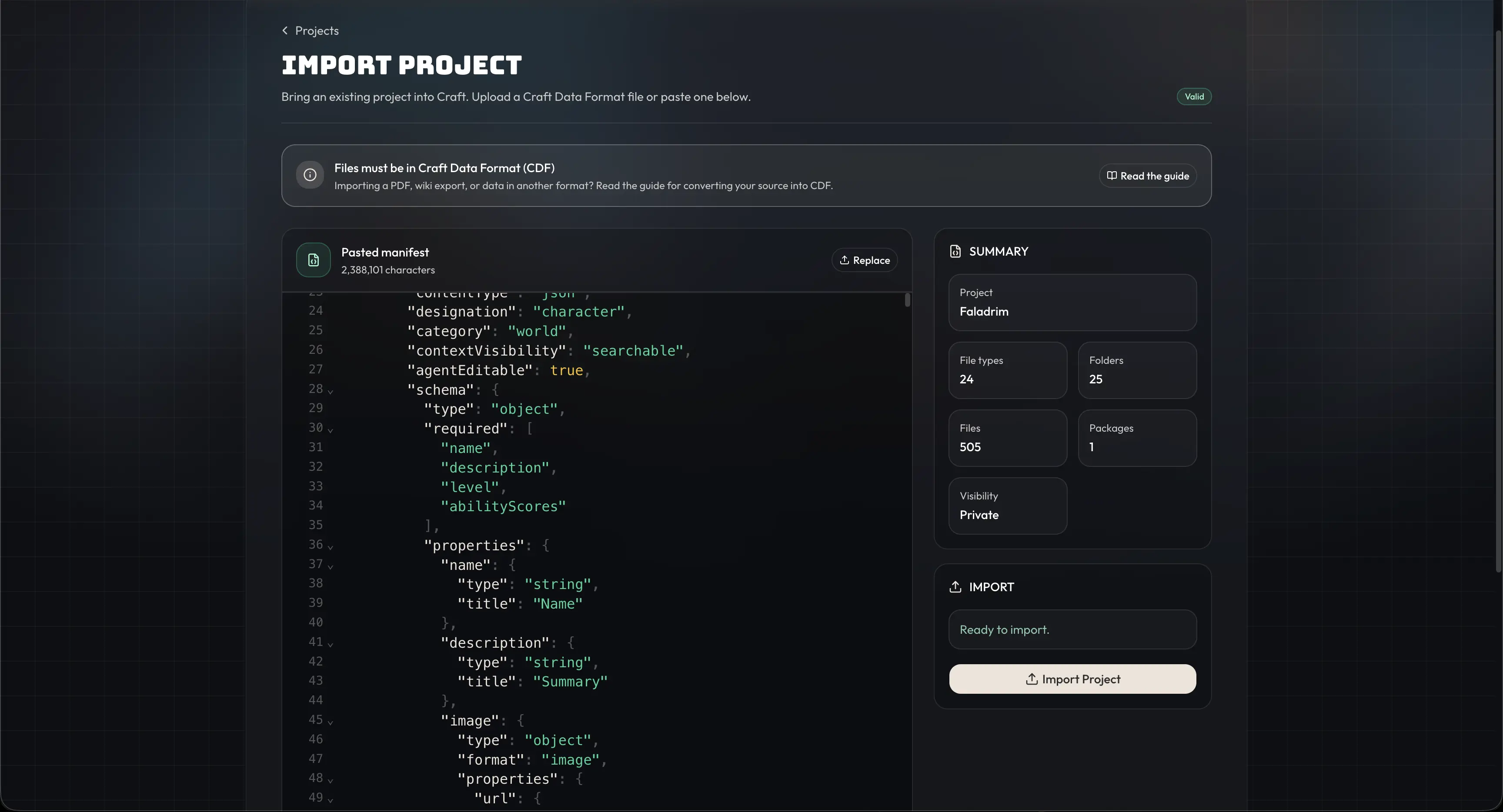
We’ve created a special data format to move data in and out of Craft. We’re creating special workflows for you to export data, edit it with external AI services, and bring it back into Craft. This allows you take full advantage of your other AI subscriptions to build more content in Craft.
Workspace
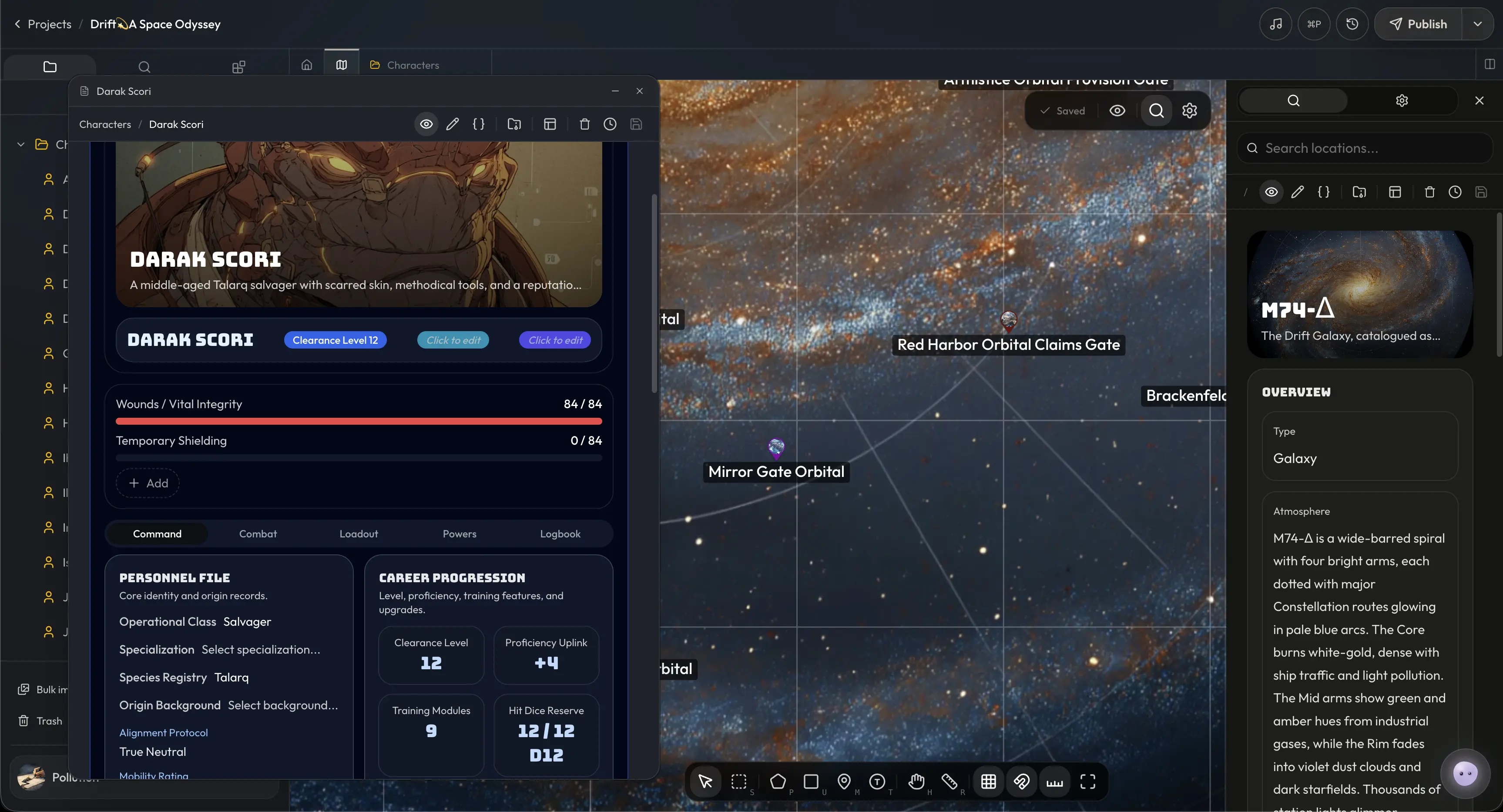
We’ve created a brand new worldbuilding workspace. In this workspace, we’ve added features for our power users, such as tabs, popout windows, and a command palette. Worldbuilders will have much more powerful tooling than before.
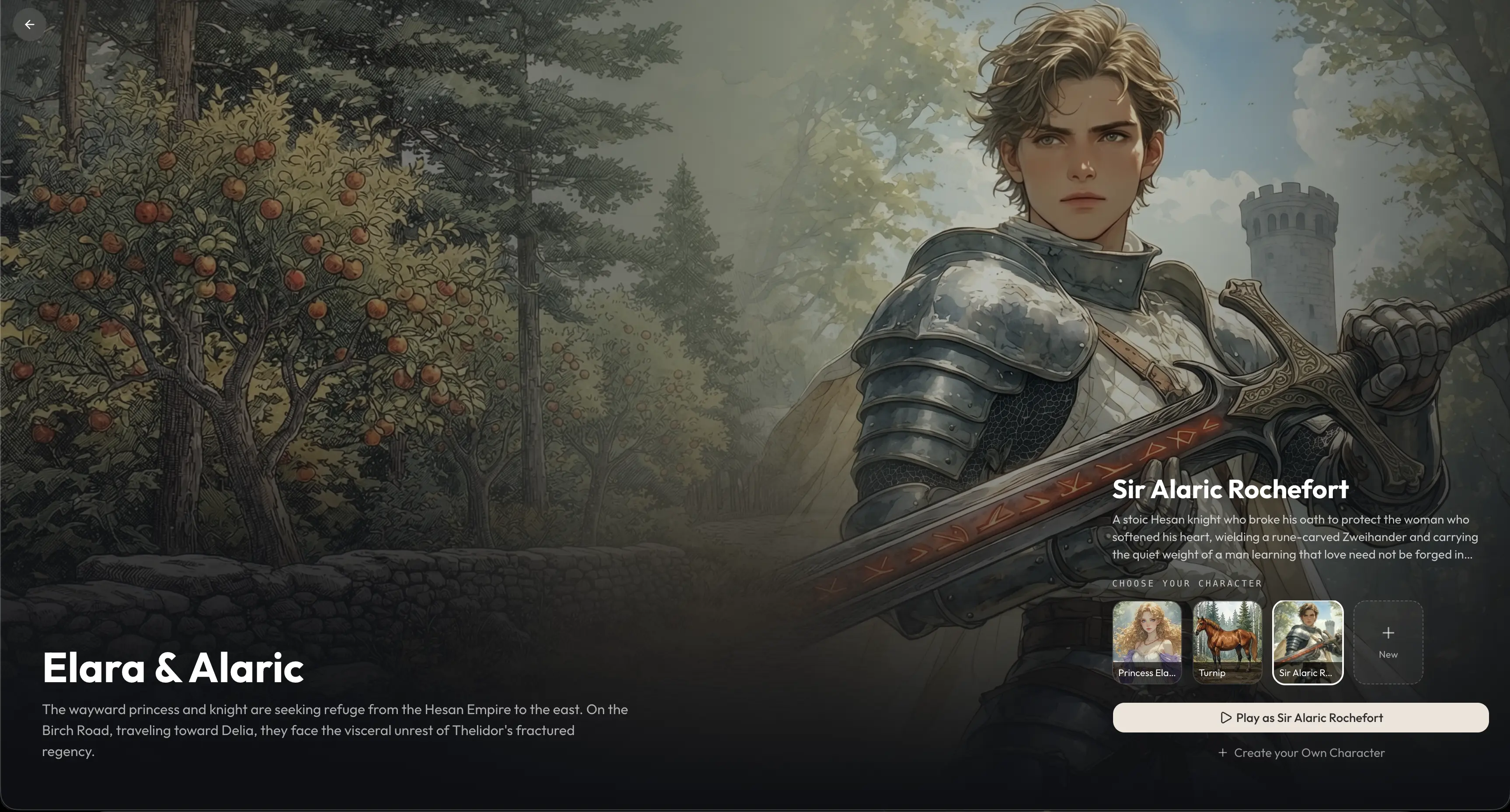
Immersive Campaign UI
We've put a ton of time and effort into making the campaign UIs in Craft as immersive as possible. We think you'll like them.
How Craft Pricing Will Work
In Friends & Fables, we were able to offer unlimited plans because we tightly controlled context, model selection, and the structure of the product.
Craft is different.
Craft gives users much more control over models, context, files, systems, and media. That flexibility is exactly what makes Craft powerful, but it also means a fully unlimited plan is not realistic in the same way.
At launch, Craft will have two pricing options:
Subscription plans with daily usage
On Demand Credit packs
Our pricing philosophy is simple: we want as many people as possible to be able to play and build in Craft.
We are going to be as generous as we can with the text generation needed to play and create. That is the core experience, and we want it to be accessible. At the same time, we are a business, and we need to make money so we can keep the lights on and keep building and improving the platform.
Our plan is for optional parts of the product, such as media generation, cosmetics, dice skins, and similar extras, to contribute to our margin. Put simply: we want to make it as affordable as possible to play and build, while letting optional extras carry more of the business model.
We are still finalizing the exact plan details during the beta period, so we do not have specific numbers to share yet. We will share more as we get closer to launch.
What Happens to Friends & Fables?
We want to be clear that we do not have plans to shut down Friends & Fables at this time.
Friends & Fables is still a great option for players who want an easy, unlimited AI D&D-style experience. Many players still love it for exactly what it is, and we want it to keep being there for them.
At the same time, we believe Craft is the future of where we want to take AI RPGs. Because of that, our main focus for the foreseeable future will be Craft. Practically, that means Friends & Fables is moving into more of a maintenance mode: it will keep running, but it won't receive updates at the same pace or scale as Craft. The remaining scope of the F&F roadmap will be reduced; for example, it's unlikely that Friends & Fables will support additional game systems in the future, since that's exactly the kind of thing Craft is being built for.
This isn't because we care less about Friends & Fables. In many ways, Craft is a spiritual successor and exists because of Friends & Fables. To fully realize the bigger version of the F&F vision, we had to build something new.
Our current plan is:
Get Craft to public release.
Make the first major rounds of Craft improvements based on feedback from early adopters.
Return to Friends & Fables improvements once Craft has settled down.
There is still a lot to figure out, and these plans may change depending on what we learn. But that's where things stand today.
Why We Believe Craft Is the Future
One thing that consistently surprised and delighted us in Friends & Fables is how many amazing worlds and experiences people could create and play through when given the right tools. Craft is our attempt to build a platform around that creativity and freedom of expression, rather than around any one system's rules.
Our philosophy with Craft is simple:
Give people amazing tools and watch them build incredible things.
It’s still early, but we’ve already seen people build incredible things and think that will only continue as the platform grows. Friends & Fables gave players a specific kind of AI RPG experience, but Craft will give players the tools to create many new AI RPG experiences.
In a few years time, we believe Craft will become the home for the best world builders and RPG creators on the internet. Creators will have the ability to build RPGs that are bigger, deeper, more ambitious, and wider reaching than many traditional tabletop RPGs today. We hope you'll join us on that journey and be one of those creators.
We’re getting really close to closed beta, and will be posting more about what you can expect from Craft in the coming days. Join our Discord to get notified when we release new information.